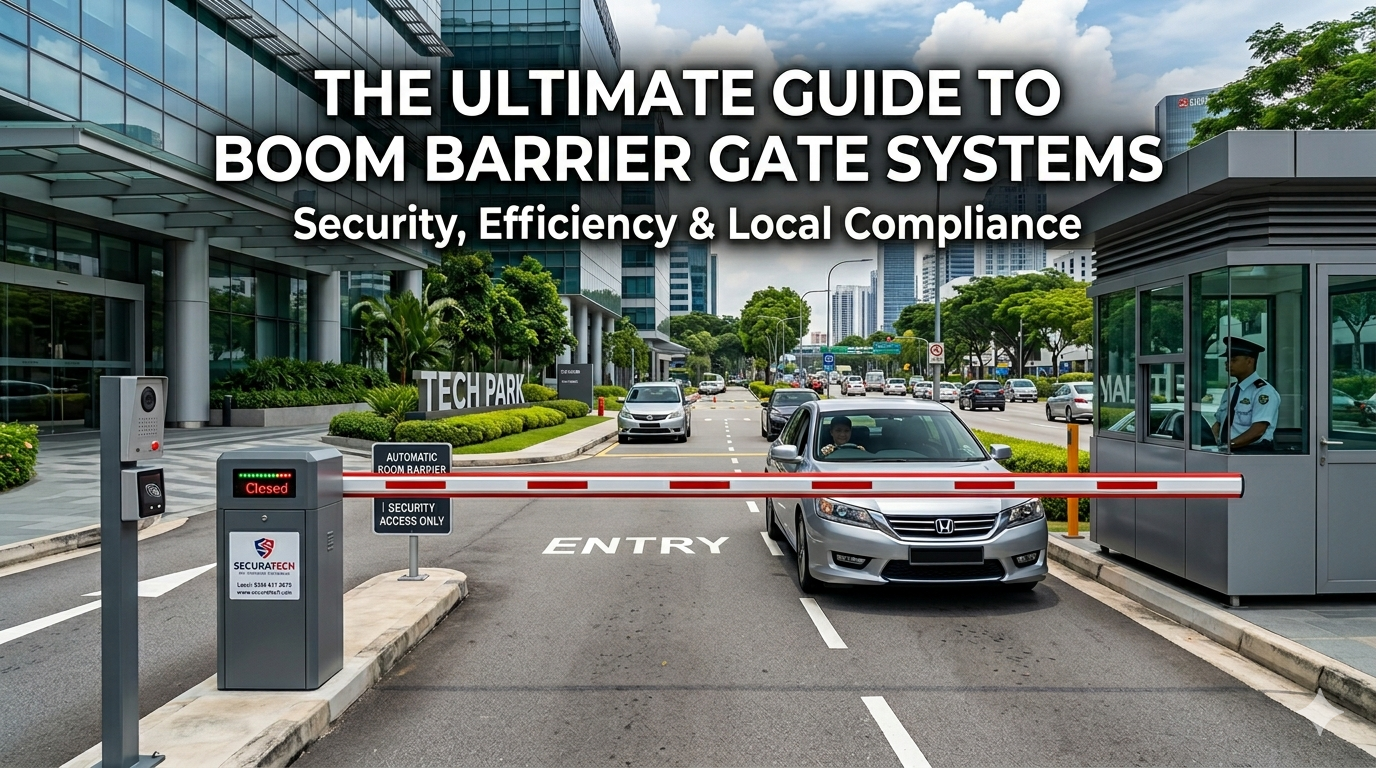
In the landscape of modern perimeter security, the boom barrier gate stands as the first line of defense for commercial, industrial, and residential properties. Whether you are managing a high-traffic parking lot or securing a sensitive industrial zone, selecting the right automated entry system is a decision rooted in probability and risk management.
What is a Boom Barrier Gate?
A boom barrier gate (also known as a boom gate) is a bar or pole pivoted to allow the boom to block vehicular access through a controlled point. Mathematically, the efficiency of a barrier is often measured by its Duty Cycle, which determines how many operations the motor can handle without overheating.
Why Automated Boom Barriers are Essential ?
With urban density increasing, the “truth” of manual security is that it is prone to human error and latency. Transitioning to an automated boom barrier gate offers three distinct advantages:
Predictable Traffic Flow: Automated systems reduce the “bottleneck effect” by processing vehicles in seconds.
Reduced Liability: Integrated safety sensors (loops and photocells) ensure the arm never descends on a vehicle or pedestrian.
Data Integration: Modern gates sync with RFID, ANPR (Automatic Number Plate Recognition), and cloud-based logging.
Choosing the Right Technology: Electromechanical vs. Hydraulic
When auditing your security infrastructure, you must choose between two primary drive mechanisms:
1. Electromechanical Boom Barriers
These are the most common for standard parking and residential use. They use a motor and gearbox. They are cost-effective and highly reliable for standard duty cycles.
2. Hydraulic Boom Barriers
Designed for high-frequency use and extreme weather conditions. Because they have fewer moving parts under friction, they often boast a higher MTBF (Mean Time Between Failures).
| Feature | Electromechanical | Hydraulic |
| Best For | Residential/Small Office | Industrial/Toll Plazas |
| Maintenance | Moderate | Low |
| Speed | Variable | High-Speed Options |
| Lifespan | 5–8 Years | 10+ Years |
Geo-Optimized Installation
Installing a boom barrier gate isn’t just about the hardware; it’s about meeting the Building Code/Regulation. In the northeast, environmental factors like [Humidity/Dust/Cold] can affect the sensor calibration and grease viscosity of your gate.
Key Local Considerations:
Wind Loading: High-wind areas require “articulated” or “lattice” booms to prevent the arm from acting as a sail.
Power Stability: In areas with fluctuating voltage, we recommend integrated UPS systems to maintain security during outages.
Local Support: Choosing a local provider in the northeast ensures that if a vehicle impacts the barrier, your downtime is measured in hours, not days.
Maintenance and Scientific Longevity
To maximize the ROI of your boom barrier gate, a preventive maintenance schedule is statistically proven to extend hardware life by up to 40%. Regular checks should include:
Spring Tension Calibration: Ensuring the counterweight balance remains precise.
Sensor Alignment: Testing the “fail-safe” logic of infrared beams.
Lubrication: Reducing the coefficient of friction in the pivot assembly.
Secure Your Property Today
Investing in a boom barrier gate is an exercise in increasing the probability of a secure, seamless environment. If you are looking for the most reliable barrier solutions in the entire northeast, our team at eastern networks provides data-backed consultations and precision installation.
Contact eastern networks today for a site assessment.
Related Posts
LARGEST IT SERVICE PROVIDER IN NORTH EAST INDIA
LARGEST IT SERVICE PROVIDER IN NORTH EAST INDIA Searching for the largest IT service provider in North East India? Explore
P2.5 indoor LED Video wall display dealer in Guwahati
Looking for a P2.5 indoor LED video wall display dealer in Guwahati? Explore display features, installation and solutions from Eastern