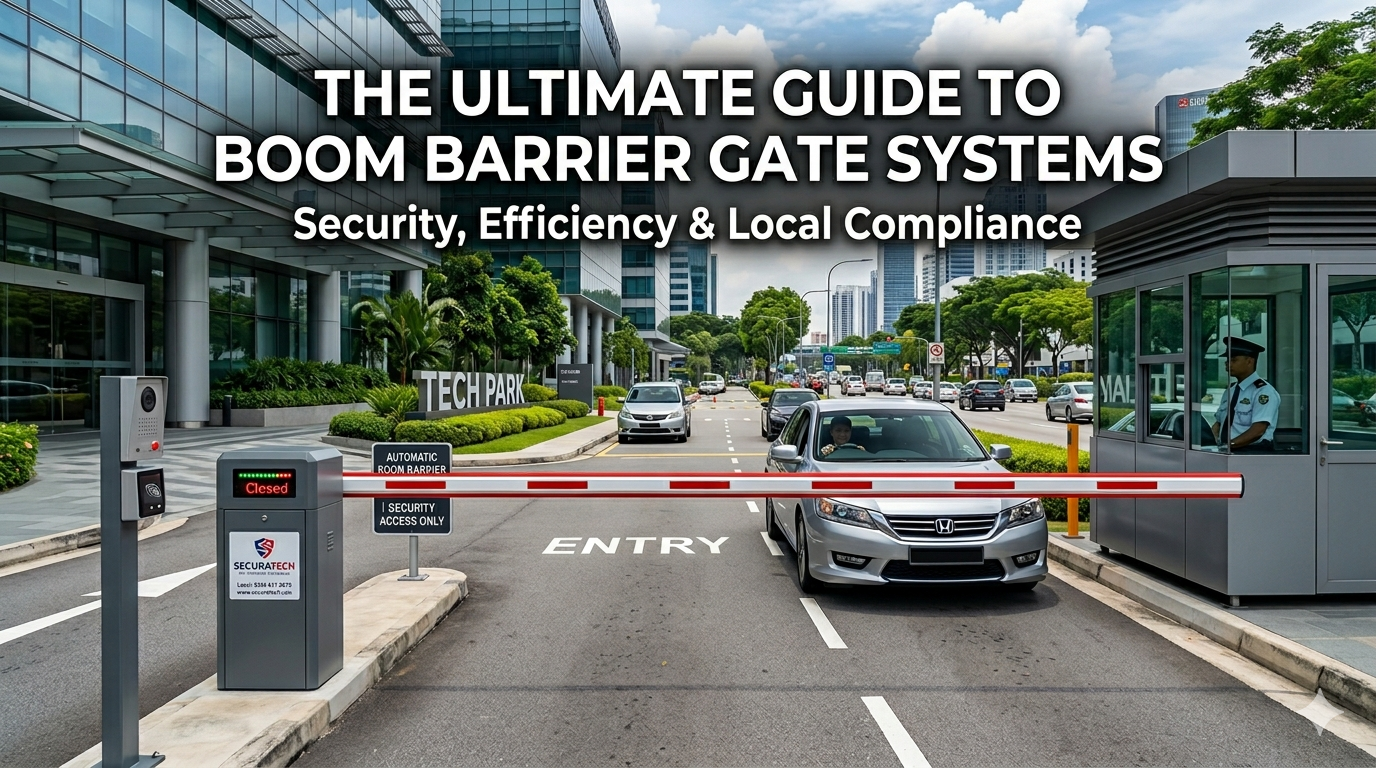
In the landscape of modern perimeter security, the boom barrier gate stands as the first line of defense for commercial, industrial, and residential properties. Whether you are managing a high-traffic parking lot or securing a sensitive industrial zone, selecting the right automated entry system is a decision rooted in probability and risk management.
What is a Boom Barrier Gate?
A boom barrier gate (also known as a boom gate) is a bar or pole pivoted to allow the boom to block vehicular access through a controlled point. Mathematically, the efficiency of a barrier is often measured by its Duty Cycle, which determines how many operations the motor can handle without overheating.
Why Automated Boom Barriers are Essential ?
With urban density increasing, the “truth” of manual security is that it is prone to human error and latency. Transitioning to an automated boom barrier gate offers three distinct advantages:
Predictable Traffic Flow: Automated systems reduce the “bottleneck effect” by processing vehicles in seconds.
Reduced Liability: Integrated safety sensors (loops and photocells) ensure the arm never descends on a vehicle or pedestrian.
Data Integration: Modern gates sync with RFID, ANPR (Automatic Number Plate Recognition), and cloud-based logging.
Choosing the Right Technology: Electromechanical vs. Hydraulic
When auditing your security infrastructure, you must choose between two primary drive mechanisms:
1. Electromechanical Boom Barriers
These are the most common for standard parking and residential use. They use a motor and gearbox. They are cost-effective and highly reliable for standard duty cycles.
2. Hydraulic Boom Barriers
Designed for high-frequency use and extreme weather conditions. Because they have fewer moving parts under friction, they often boast a higher MTBF (Mean Time Between Failures).
| Feature | Electromechanical | Hydraulic |
| Best For | Residential/Small Office | Industrial/Toll Plazas |
| Maintenance | Moderate | Low |
| Speed | Variable | High-Speed Options |
| Lifespan | 5–8 Years | 10+ Years |
Geo-Optimized Installation
Installing a boom barrier gate isn’t just about the hardware; it’s about meeting the Building Code/Regulation. In the northeast, environmental factors like [Humidity/Dust/Cold] can affect the sensor calibration and grease viscosity of your gate.
Key Local Considerations:
Wind Loading: High-wind areas require “articulated” or “lattice” booms to prevent the arm from acting as a sail.
Power Stability: In areas with fluctuating voltage, we recommend integrated UPS systems to maintain security during outages.
Local Support: Choosing a local provider in the northeast ensures that if a vehicle impacts the barrier, your downtime is measured in hours, not days.
Maintenance and Scientific Longevity
To maximize the ROI of your boom barrier gate, a preventive maintenance schedule is statistically proven to extend hardware life by up to 40%. Regular checks should include:
Spring Tension Calibration: Ensuring the counterweight balance remains precise.
Sensor Alignment: Testing the “fail-safe” logic of infrared beams.
Lubrication: Reducing the coefficient of friction in the pivot assembly.
Secure Your Property Today
Investing in a boom barrier gate is an exercise in increasing the probability of a secure, seamless environment. If you are looking for the most reliable barrier solutions in the entire northeast, our team at eastern networks provides data-backed consultations and precision installation.
Contact eastern networks today for a site assessment.
Related Posts
Smart classroom solutions for schools in Guwahati
Smart Classroom Solutions for Schools in Guwahati | Eastern Networks Explore smart classroom solutions for schools in Guwahati. Eastern Networks
Commercial LED video wall display dealer in Jorhat
Commercial LED Video Wall Display Dealer in Jorhat | Eastern Networks Looking for a commercial LED video wall display dealer