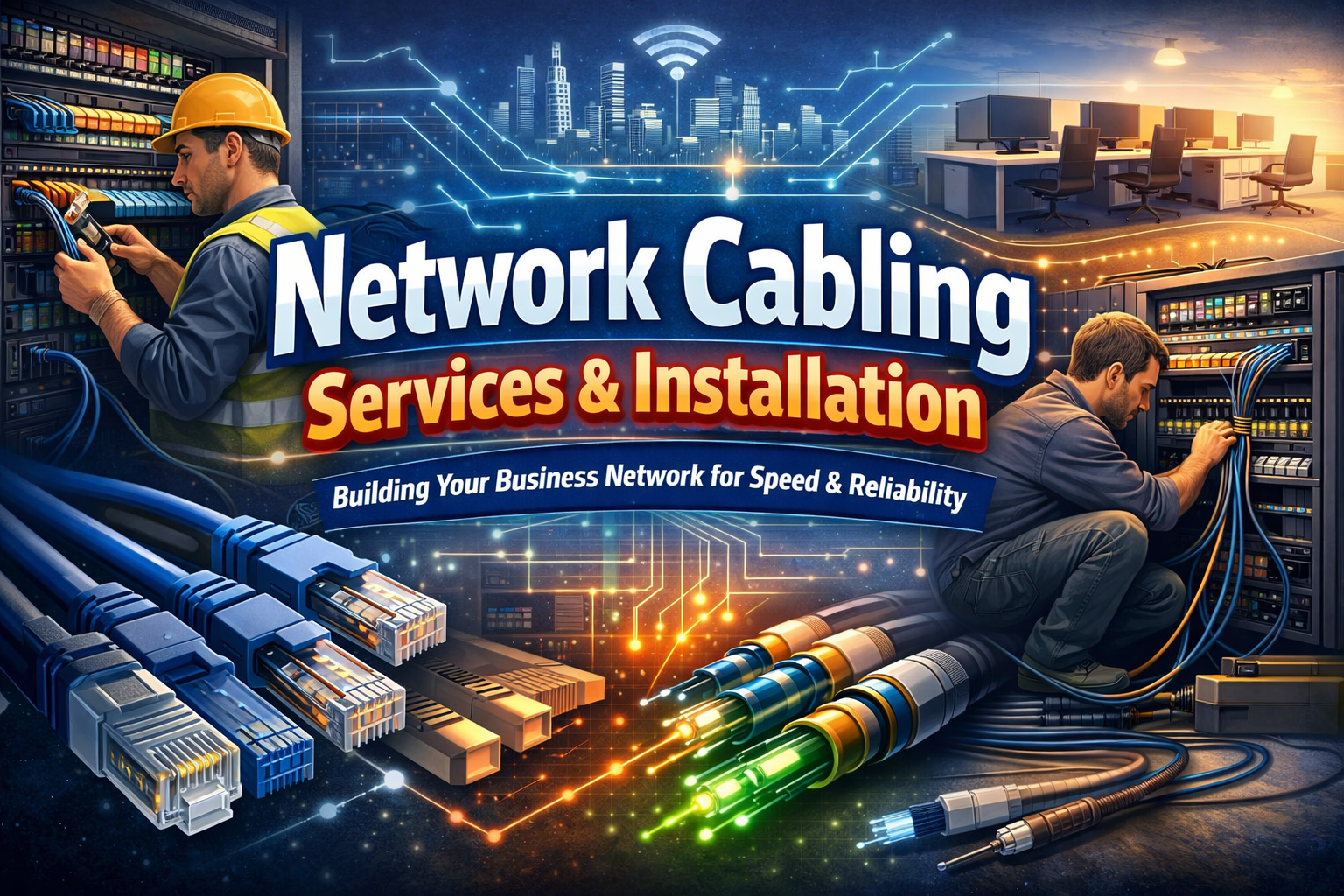
Modern businesses depend on a stable, high-performing network more than ever. Whether you run a small office, a growing enterprise, a retail space, or a multi-floor commercial facility, your internet speed, internal communication, security systems, VoIP phones, and connected devices all rely on one core foundation: structured cabling.
That is why network cabling services are so important. A well-planned cabling system does far more than connect computers to the internet. It creates the backbone of your entire digital environment. From seamless data transfer to reduced downtime and easier scaling, professional cabling directly impacts business performance.
At the center of this foundation is network cabling installation. If installation is done poorly, even the best equipment will underperform. If it is done correctly, the network becomes faster, cleaner, easier to manage, and more future-ready.
In this guide, we will explain what network cabling services include, why proper network cabling installation matters, and how businesses can choose the right solution for long-term growth.
What Are Network Cabling Services?
Network cabling services refer to the planning, design, installation, testing, labeling, maintenance, and upgrading of physical cabling systems that support your network infrastructure. These services are used in offices, factories, schools, hospitals, warehouses, retail stores, and data-driven businesses of all sizes.
A professional provider of network cabling services typically handles:
- Ethernet cable installation
- Fiber optic cabling
- Voice and data cabling
- Structured cabling design
- Rack and patch panel setup
- Cable testing and certification
- Cable management and organization
- Troubleshooting and repairs
- Network upgrades and expansions
In simple terms, network cabling services ensure that your entire communication system is connected properly and built to perform reliably.
Why Network Cabling Installation Matters
A network is only as good as its physical foundation. That is why network cabling installation should never be treated as a basic wiring job. It requires technical planning, precision, and an understanding of how the building, devices, and business operations interact.
Poor network cabling installation can cause:
- Slow internet speeds
- Frequent disconnections
- Signal interference
- Higher maintenance costs
- Difficult troubleshooting
- Future upgrade limitations
- Unorganized server rooms and workspaces
On the other hand, professional network cabling installation creates a stable infrastructure that supports current demand and future expansion. It allows your business to add more devices, users, and systems without constantly reworking the network.
Types of Network Cabling Used in Businesses
Different environments require different cabling solutions. A strong provider of network cabling services will recommend the right cable type based on your speed needs, distance, budget, and scalability goals.
1. Ethernet Cabling
Ethernet is the most common choice for business networks. Cat5e, Cat6, Cat6a, and higher categories support different speeds and bandwidth levels. For most modern offices, Cat6 or Cat6a is often preferred because it supports better performance and long-term usability.
2. Fiber Optic Cabling
Fiber optic cabling is ideal for high-speed data transmission and long-distance connectivity. It is commonly used in large buildings, campuses, and data-heavy environments where performance and reliability are critical.
3. Coaxial Cabling
Although less common in modern office networking, coaxial cabling is still used in specific applications such as broadband, CCTV, and certain legacy systems.
4. Voice Cabling
Voice cabling supports telephone systems and VoIP setups. Good network cabling services ensure that voice communication is clean, consistent, and integrated with the rest of the infrastructure.
Benefits of Professional Network Cabling Services
Professional network cabling services provide far more value than simply “running wires.” They help businesses create a smarter, more efficient digital environment.
Better Network Performance
High-quality cabling reduces latency, packet loss, and interference. That means faster file transfers, smoother video calls, and more stable operations.
Reduced Downtime
A poorly installed network can fail repeatedly. Professional network cabling installation minimizes faults and reduces the risk of unexpected outages.
Easier Expansion
As your company grows, your network should grow with it. Structured cabling makes it much easier to add workstations, cameras, access points, and other systems later.
Cleaner Infrastructure
When cables are labeled, organized, and installed properly, maintenance becomes easier. Technicians can identify issues quickly and make changes without disrupting the entire network.
Better Return on Investment
Quality network cabling services may cost more upfront, but they save money over time by reducing repairs, downtime, and inefficiencies.
Signs Your Business Needs Network Cabling Installation or an Upgrade
Many businesses wait until network problems become severe before taking action. In reality, there are usually clear signs that you need professional network cabling installation or an upgrade.
Common warning signs include:
- Slow network performance during normal use
- Frequent signal drops or unstable connections
- Messy, unlabeled, or outdated cabling
- Difficulty supporting new devices
- Old cabling that no longer meets speed requirements
- Recurring network errors
- Heating issues in server or network rooms
- Expansion plans that current infrastructure cannot support
If these issues sound familiar, it is likely time to evaluate your cabling system and invest in professional network cabling services.
How Network Cabling Installation Is Done
A well-executed network cabling installation follows a structured process. This is one of the main reasons it is best handled by experienced professionals rather than improvised in-house.
Step 1: Site Assessment
The process begins with a detailed evaluation of the building, layout, user requirements, and future growth plans.
Step 2: Cabling Design
Based on the assessment, a cabling plan is created. This includes cable routes, equipment placement, connection points, and network segmentation.
Step 3: Cable Installation
Technicians install the cables, connectors, patch panels, racks, and related hardware with proper spacing and organization.
Step 4: Testing and Certification
Each connection is tested to ensure signal quality, performance, and compliance with standards.
Step 5: Labeling and Documentation
Every line is labeled clearly so that future maintenance and troubleshooting are easier.
Step 6: Ongoing Support
Reliable network cabling services do not end after installation. Many providers also offer maintenance, troubleshooting, and upgrades.
Choosing the Right Network Cabling Services Provider
Selecting the right provider is critical. Not every company offering network cabling services delivers the same quality. A strong provider should have technical expertise, project experience, and a clear understanding of business networking needs.
Look for a provider that offers:
- Experience with commercial network cabling installation
- Knowledge of structured cabling standards
- Transparent project planning and timelines
- High-quality materials and certified components
- Detailed testing and documentation
- Support for future upgrades
- Strong reputation and client references
The right partner will not just install cables. They will design a reliable network foundation that supports your business goals.
Network Cabling Installation for Different Business Types
Different industries have different needs. That is why network cabling installation should always be customized.
Small Offices
Small businesses need cost-effective cabling that is simple, scalable, and reliable.
Large Enterprises
Large companies often need structured cabling across multiple floors, departments, and server rooms.
Retail Stores
Retail businesses rely on network cabling for billing systems, POS terminals, security cameras, and Wi-Fi access points.
Warehouses and Industrial Spaces
These environments need durable, organized cabling that can support scanners, cameras, automation tools, and communication systems.
Schools and Institutions
Educational facilities need strong cabling to support classrooms, labs, administrative offices, and digital learning tools.
In each case, professional network cabling services ensure the infrastructure matches the specific operational needs of the organization.
Why Structured Cabling Is Better Than Random Cable Setup
A structured cabling system is organized, scalable, and easy to maintain. Random or unplanned wiring may appear cheaper at first, but it usually creates problems later.
Structured network cabling installation offers:
- Better organization
- Easier troubleshooting
- Faster upgrades
- Lower maintenance costs
- Improved reliability
- Better long-term performance
This is one of the main reasons businesses invest in professional network cabling services instead of using temporary or patchwork solutions.
Common Mistakes to Avoid
Even a powerful network can fail if the cabling is handled poorly. Some common mistakes include:
- Using the wrong cable category
- Ignoring cable length limits
- Running data cables too close to power lines
- Skipping testing after installation
- Failing to label cables properly
- Choosing the cheapest option instead of the right one
- Not planning for future growth
Avoiding these mistakes is one of the biggest advantages of hiring experienced professionals for network cabling installation.
The Long-Term Value of Network Cabling Services
Many people think of cabling as a one-time expense. In reality, it is an investment in business continuity, productivity, and scalability.
Strong network cabling services help businesses:
- Work faster
- Reduce technical disruptions
- Support modern devices and applications
- Improve communication
- Prepare for future upgrades
- Protect operational efficiency
As businesses depend more on cloud systems, remote collaboration, security devices, and data-driven tools, the importance of reliable network cabling installation continues to grow.
Final Thoughts
If your business depends on stable internet, smooth communication, and scalable infrastructure, then professional network cabling services are not optional. They are essential. A well-designed network cabling installation creates the backbone for productivity, reliability, and long-term growth.
Whether you are building a new office, upgrading outdated infrastructure, or expanding into a larger space, the right cabling system will save time, reduce problems, and support your operations for years to come.
The best networks are not built on temporary fixes. They are built on clean planning, professional installation, and quality service.
FAQ'S
What are network cabling services?
Network cabling services include the design, installation, testing, maintenance, and upgrading of cabling systems that support business networks.
Why is network cabling installation important?
Network cabling installation is important because it directly affects network speed, reliability, scalability, and long-term maintenance.
How often should network cabling be upgraded?
It depends on the age of the system, business growth, and performance needs. Many businesses upgrade when their cabling can no longer support modern speed and bandwidth requirements.
Is structured cabling worth it?
Yes. Structured cabling is easier to manage, more scalable, and more reliable than unorganized wiring.
Which is better: fiber optic or Ethernet?
It depends on the use case. Ethernet is suitable for many office environments, while fiber optic cabling is better for high-speed, long-distance, or high-demand setups.
Related Posts
Smart classroom solutions for schools in Guwahati
Smart Classroom Solutions for Schools in Guwahati | Eastern Networks Explore smart classroom solutions for schools in Guwahati. Eastern Networks
Commercial LED video wall display dealer in Jorhat
Commercial LED Video Wall Display Dealer in Jorhat | Eastern Networks Looking for a commercial LED video wall display dealer